
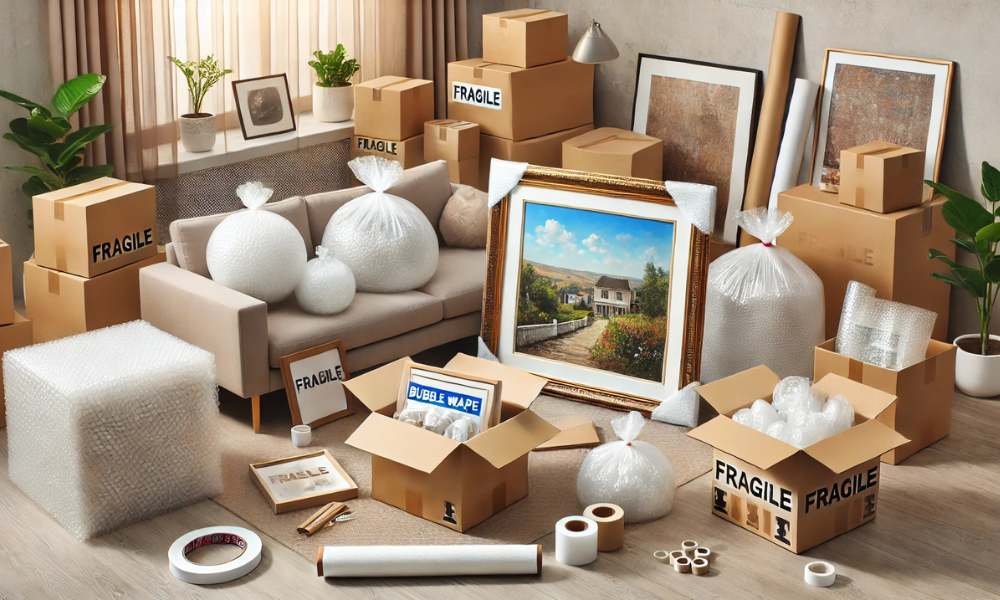
Packing wall art for moving requires care and precision to ensure your valuable pieces arrive safely. Whether it’s framed artwork, canvas paintings, or delicate prints, learning how to pack wall art for moving can save you from damage during transit. Start by gathering materials like sturdy boxes, bubble wrap, packing tape, and corner protectors. Wrap each piece individually and secure it firmly to avoid shifting. Label boxes as fragile to alert movers. With the right steps, you can preserve your artwork’s integrity and make your move stress-free. Keep reading for a detailed guide to safeguard your wall art and make your relocation a seamless experience!
Understanding Different Types Of Wall Art And Their Packing Needs
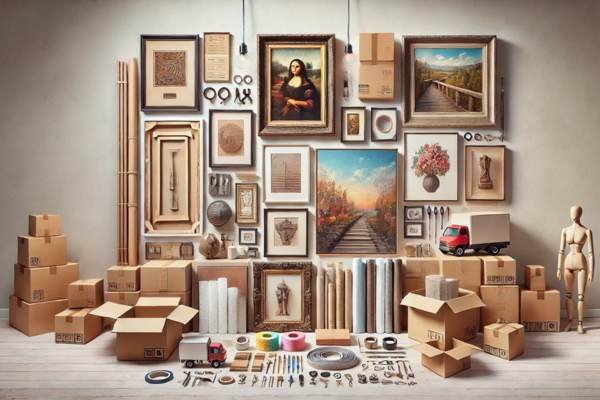
Wall art takes many forms, and each type requires distinct attention when it comes to packing. The varying materials, shapes, and sizes mean there’s no one-size-fits-all approach.
- Framed Paintings and Photographs: These are typically fragile, especially those with glass. The delicate paper or canvas inside makes them susceptible to scratches, dents, or cracks.
- Canvas Art: While unframed canvas art may be more durable, it still demands careful handling to avoid creases or damage to its surface.
- Sculptures and 3D Art: These pieces, often varying greatly in size and material, present their own unique packing challenges.
- Mirrors: More than just decorative, mirrors have delicate glass that requires extra care to avoid breakage during transport.
Each type of wall art calls for a specialized packing technique and material, so understanding what you’re dealing with is essential for the process ahead.
Gathering Supplies For Safe Packing
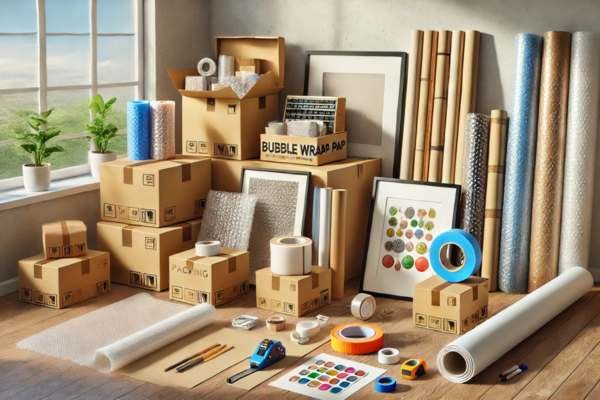
The importance of having the right materials cannot be overstated. These are the tools you’ll need to safeguard your art during the move:
- Bubble wrap: Perfect for cushioning fragile items, especially glass and frames.
- Packing paper: Ideal for wrapping artwork to shield the surface from scratches and marks.
- Stretch wrap: Essential for securing frames, preventing any movement inside boxes.
- Foam corner protectors: These will help preserve the integrity of the artwork’s corners.
- Packing tape: To secure wraps and flaps, ensuring everything stays in place.
- Sturdy boxes: Look for specially designed art boxes that offer extra strength and durability.
- Markers: To label your packed artwork clearly, ensuring it’s identifiable during transport.
Having all these materials on hand will make the packing process smoother and more efficient.
Preparing Your Work Area for Packing Wall Art

To pack wall art efficiently and securely, start by designating a clean, spacious area. This could be a large table or the floor, ideally covered with a soft cloth to avoid scratches. Ensure the space is uncluttered, allowing you to handle each piece with precision and care. Having a well-organized workspace makes a significant difference when it comes to packing delicate items.
Pre-Packing Precautions
Before you begin wrapping your artwork, take a few vital precautions. First, if the pieces are valuable or fragile, photograph them for insurance purposes. Remove any loose hangers, nails, or other components that could cause damage during transit. For framed artwork, carefully inspect the frame and glass for cracks or weaknesses. If necessary, apply additional protection by replacing weak glass or using special glass protectors.
Packing Unframed Canvas Art Safely
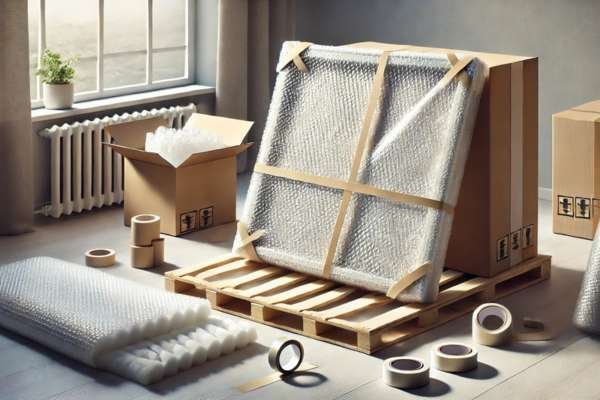
Unframed canvas arrange wall art, though more robust than framed pieces, still requires diligent care. Begin by wrapping the canvas in bubble wrap, ensuring it covers the entire surface—front, back, and sides. Once secured, wrap the piece with stretch wrap or packing tape to hold the bubble wrap in place. Then, place the canvas in a sturdy cardboard box. For added protection, line the box with foam sheets or crumpled packing paper to prevent shifting and ensure the canvas stays secure during transit.
Tips For Packing Glass And Mirror Art
When packing glass or mirror art, extra precaution is necessary due to the fragility of the glass. Start by applying masking tape in an “X” pattern across the glass. This technique holds the glass together should it break during the move. Next, wrap the piece in several layers of bubble wrap, ensuring the corners are heavily padded. For mirrors, it’s advisable to use a custom mirror box. These boxes are designed to offer additional protection. If one isn’t available, wrap the glass in thick packing paper before bubble wrapping for extra reinforcement.
Special Care For Packing Sculptures And 3D Art

Packing sculptures or 3D art is a different animal altogether. These pieces, often made of wood, metal, or clay, vary greatly in size and shape, requiring a tailored approach. Smaller sculptures can be wrapped in soft packing paper or bubble wrap, ensuring all surfaces are cushioned. Larger, heavier sculptures may need custom crates for adequate protection. For these, wooden crates offer robust security, with foam or packing peanuts filling any gaps to prevent movement during transit.
Step-By-Step Guide On How To Pack Wall Art For Moving
- Prepare your workspace: Lay down a clean cloth and gather all packing supplies.
- Wrap each piece carefully: For framed art, wrap it in bubble wrap or foam padding, covering all surfaces. For an unframed canvas, use packing paper or bubble wrap.
- Secure with tape: After wrapping, use stretch wrap or packing tape to secure the materials.
- Box it up: Choose a sturdy box designed for artwork. Ensure the box is snug but not too tight, and fill any extra space with foam or packings paper.
- Label each box: Clearly mark boxes as fragile and include handling instructions, such as “Glass – Handle with Care” or “Do Not Stack.”
How To Label Packed Wall Art For Easy Moving And Unpacking
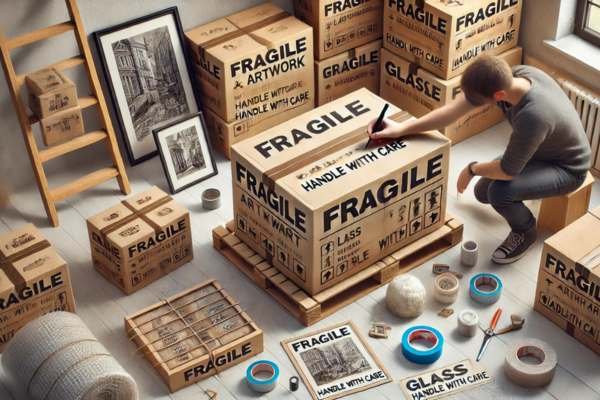
Proper labeling is essential for safe transport. Mark each box with “Fragile: Artwork” and use arrows to indicate the correct orientation. Add specific instructions like “Do Not Stack” or “Glass – Handle with Care” to help movers treat your pieces with the necessary caution. Well-labeled boxes reduce the risk of mishandling and ensure your artwork reaches its destination intact.
Protecting Wall Art From Temperature And Humidity During The Move
Extreme temperatures or humidity fluctuations can wreak havoc on delicate artwork, especially canvas or paper pieces. If possible, avoid exposing your art to direct sunlight or drastic temperature changes during the move. For long-distance relocations, it’s wise to store your artwork in climate-controlled conditions. Many moving companies offer climate-controlled storage options for artwork—consider this if you’re facing an extended journey.
Unpacking And Setting Up Wall Art In Your New Home

Once your artwork reaches your new home, the unpacking process begins. Carefully remove the packaging, starting with the corners to avoid damaging edges. Once the bubble wrap or packings paper is removed, inspect each piece for any signs of damage. When hanging or displaying artwork, ensure the installation area is secure, using appropriate hooks or nails designed to support the weight of each piece.
Handling Large Or Oversized Wall Art Safely

Large or oversized pieces of pack wall art for moving equire special care. These pieces should be transported flat, if possible, to avoid undue pressure. For extra-large pieces, custom crates offer the most protection. If the pieces are particularly heavy or cumbersome, enlist help when loading and unloading to prevent strain or accidents.
How To Pack Framed Wall Art For Moving
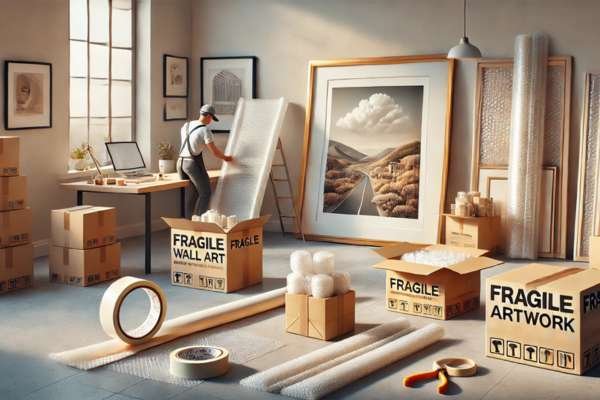
Framed artwork is among the most delicate to pack. Begin by securing the frame with bubble wrap, paying close attention to the corners. Cover the glass with masking tape in an “X” shape to reduce the risk of it shattering. Wrap the entire artwork in packing paper, followed by bubble wrap. Finally, place the wrapped piece into a box that is slightly larger than the artwork itself to allow room for cushioning.
Disposing Or Recycling Packing Materials After The Move
Once the move is complete, it’s important to dispose of or recycle your packing materials responsibly. Bubble wrap, packings paper, and foam sheets can be reused for future moves or stored for safe-keeping. Boxes can be flattened and recycled or repurposed for storage. Be sure to follow your local recycling guidelines to ensure the materials are disposed of in an environmentally friendly manner.
Final Checklist For Packing And Moving Wall Art
- Gather all necessary packing supplies.
- Carefully wrap each piece in bubble wrap or packing paper.
- Use sturdy boxes or custom crates to protect your art.
- Label boxes clearly with fragile handling instructions.
- Protect artwork from temperature and humidity changes.
- Inspect and carefully unpack your art upon arrival.
Frequently Asked Questions
1. What is the Best Way to Protect Framed Art During a Move?
To protect framed art during a move, wrap the artwork in bubble wrap, cover the glass with masking tape, and use a sturdy box. Label the box as fragile and ensure proper handling.
2. How Do I Safely Pack Large Canvas Art?
Wrap large canvas art in bubble wrap, securing extra padding around the edges. Use a custom box or crate and fill any gaps with foam or packings paper for added security.
3. Tips for Safely Packing Artwork for Relocation?
Utilize high-quality packing materials, label each box with clear instructions, and consider professional packing services for valuable pieces.
Final Thoughts
Packing wall art for moving requires careful preparation to ensure your valuable pieces arrive safely. By using protective materials like bubble wrap, sturdy boxes, and corner protectors, you can minimize the risk of damage. Label your packages clearly and secure them to avoid shifting during transit. Taking these precautions makes the process of packing wall art for moving seamless and stress-free. For the first-rate consequences, plan ahead and handle each piece with care, ensuring your art is ready to beautify your new space.